Tightened Regulation on Pan Masala & Consumer Safety Law 2025

Tightened Regulation on Pan Masala & Consumer Safety Law 2025

The regulatory landscape for the Pan Masala and tobacco industry in India has witnessed a paradigm shift in 2025. Moving beyond simple tariff hikes, the Government of India has deployed a multi-faceted legal strategy involving fiscal statutes, consumer protection amendments, and strict enforcement protocols. For stakeholders in the industry, 2025 marks the end of the “grey zones” regarding production reporting and pricing transparency.

The Fiscal Overhaul: Capacity-Based Taxation

In December 2025, Parliament passed the Health Security se National Security Cess Bill, 2025. This legislation is a structural overhaul of how tax liability is determined for Pan Masala and Gutkha manufacturers, rather than being a mere tax increase.

The Shift from “Clearance” to “Capacity”

Previously, taxation was largely linked to the actual output or “clearance” of goods. This system faced challenges with under-reporting, where manufacturers could understate their production figures to evade GST and Compensation Cess.

The new Bill reintroduces and solidifies a capacity-based levy. Instead of taxing the quantity produced, the government will now levy a special cess based on the production capacity of the machines installed in the factory.

  • Deemed Production: The law presumes a certain level of production based on the machine’s speed and type.
  • Machine Registration: Manufacturers must mandatorily register their packing machinery. Failure to register or mis-declaring machine capacity now attracts stringent penalties, including potential imprisonment.
  • Dual Objective: As the name suggests, the revenue generated (distinct from GST) is earmarked for two specific verticals: funding national health infrastructure and bolstering national security defence expenditure.

This removes the scope for claiming “downtime” or “low demand” as a reason for lower tax payments unless strictly proven under the new rigid rules. The tax liability becomes a fixed operational cost rather than a variable one.

Consumer Safety & Transparency: The "Small Pack" Loophole Closed

Parallel to the fiscal changes, the Department of Consumer Affairs has notified the Legal Metrology (Packaged Commodities) Second (Amendment) Rules, 2025.

The End of the <10g Exemption

Historically, small packets of Pan Masala and tobacco products (weighing 10 grams or less) were exempt from certain declarations, including the mandatory display of the Retail Sale Price (RSP) on the package. This exemption was a significant loophole because it allowed manufacturers to sell small pouches without clear pricing transparency. These small pouches often constitute the bulk of the market volume, leading to consumer exploitation and complicating tax assessments based on RSP.

The New Mandate (Effective Feb 1, 2026):

  • Universal Display: The amendment removes the exemption. All packages, regardless of size or weight (even the INR 5 or INR 10 pouches), must now clearly display the Retail Sale Price.
  • GST Linkage: This Legal Metrology amendment is directly linked to the GST Council’s strategy. By mandating RSP on every pouch, the government paves the way for a more effective RSP-based GST levy. It closes the gap where the taxable value was ambiguous for smaller SKUs.

The “Sin Good” Classification & Judicial Stance

The broader “Consumer Safety” narrative in 2025 has also been reinforced by the GST Council’s “Next-Gen” reforms and judicial interventions.

  • 40% Tax Slab: Pan Masala remains firmly categorized as a “sin good,” attracting the highest GST slab of 28% plus the new Cess, effectively bringing the tax incidence to around 40%.
  • Judicial Vigilance: Throughout 2025, courts (notably the Madras and Delhi High Courts) have maintained a strict interpretation of public health over commercial interests. The judiciary has upheld state bans on the sale of Gutkha/Pan Masala containing tobacco, clarifying that while “raw tobacco” might have legal protections, the mixture (Pan Masala with tobacco) falls under the food safety bans due to its carcinogenic nature.

Compliance Advisory for Manufacturers

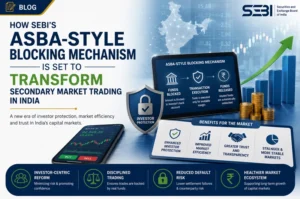
To understand the significance of this proposal, we must first understand the current “Lock-in” regime under the SEBI (Issue of Capital and Disclosure Requirements) Regulations, 2018 (ICDR Regulations).

The 6-Month Rule (Regulation 17)

If pre-IPO investors dump shares immediately after a company finishes listing, it could crash the stock price and harm retail investors. To prevent this from happening, SEBI mandates a lock-in period.

  • Promoters are typically locked in for 18 months or 3 years.
  • Non-Promoters (Pre-IPO Investors): The entire pre-issue capital held by non-promoters is locked in for 6 months from the date of allotment in the IPO.

The Operational Bottleneck

While the rule is clear in theory, it faces a technical hurdle in practice. Many pre-IPO investors (such as High Net-worth Individuals or investment firms) pledge their shares to banks or Non-Banking Financial Companies (NBFCs) to raise capital.

The current systems used by India’s depositories (NSDL and CDSL) cannot place a “lock-in” tag on shares that are already marked as “pledged.” The system views these two statuses as technically incompatible. Consequently, when a company files for an IPO, these investors are often forced to un-pledge their shares to allow the lock-in tag to be applied. This disrupts their financial planning and can delay the IPO if investors are unable or unwilling to release the pledge immediately.

3. The SEBI Proposal (November 2025)

For manufacturers, the “business as usual” approach is no longer tenable. The compliance checklist for late 2025 and early 2026 must include:

  1. Machine Audit: rigorous internal audit of all packing machines to ensure declared capacity matches actual specifications. Any discrepancy can lead to disproportionate tax liability under the new Cess Bill.
  2. Packaging Overhaul: Redesigning of artwork for all SKUs, specifically the <10g pouches, to include RSP and other Legal Metrology declarations before the February 1, 2026, deadline.
  3. Inventory Management: Clearing out old packaging inventory that does not comply with the new RSP norms to avoid seizure of stock.

The tightening regulations of 2025 signal the government’s intent to treat Pan Masala not just as a revenue source, but as a strictly regulated commodity with high social costs. The Health Security se National Security Cess Bill plugs the revenue leakage through capacity-based taxation, while the Consumer Safety (Legal Metrology) amendments ensure that even the smallest consumer unit is transparently priced and taxed.

5. The Informal Sector Gap

This proposal represents a shift from “compliance by force” to “compliance by design.” The implications for various stakeholders are detailed below:

For Pre-IPO Investors (PE/VC Funds, HNIs)

  • Liquidity Preservation: Investors no longer need to scramble to repay loans to “free up” shares for the IPO lock-in. They can keep their leverage (loans) active while complying with SEBI norms.
  • Exit Certainty: It removes the friction that often complicates the transition from being a private shareholder to a public one.

For Issuers (The Company)

  • Faster Listings: The “pledged share” issue is a common reason for delays in filing the Red Herring Prospectus (RHP). By removing this hurdle, companies can stick to tighter IPO timelines.
  • Reduced Friction with Investors: Promoters and management no longer need to negotiate with reluctant investors to un-pledge shares. This reduces internal conflict during the critical pre-IPO phase.

For Lenders (Banks/NBFCs)

  • Clarified Rights: Previously, the conflict between “pledge” and “lock-in” created legal ambiguity. The new proposal clarifies that lenders retain their security interest (the pledge).
  • Restriction on Liquidation: Lenders must be aware that while they can seize the shares upon default, they cannot sell them immediately if the IPO lock-in is still active. This creates a temporary illiquidity risk that lenders will need to factor into their credit risk assessment for pre-IPO financing.

See Also

dubai-11

Securities Market Code, 2025

Securities Market Code, 2025 The Indian capital markets have operated under a fragmented legal framework for decades. The introduction of the Securities Market Code, 2025

Read More »

Related Posts

YOU ARE WELCOME!

We, the LegalLands LLP , are a family of exceptional professionals with expertise in the fields of law, taxation, business administration, consultation services, etc. We understand your problems and work to the best of our abilities, tailoring our knowledge and expertise to your specific interests and needs, to arrive at the best suitable solutions to your problems. Our aims are to cater to your needs rather than viewing these needs as opportunities to enrich ourselves at your cost!
We look forward to many more engagements with you which keep adding value to your lives.
Together and onwards we march on toward new milestones in our illustrious journey.

RAJIV TULI

Managing Partner

Legallands LLP